
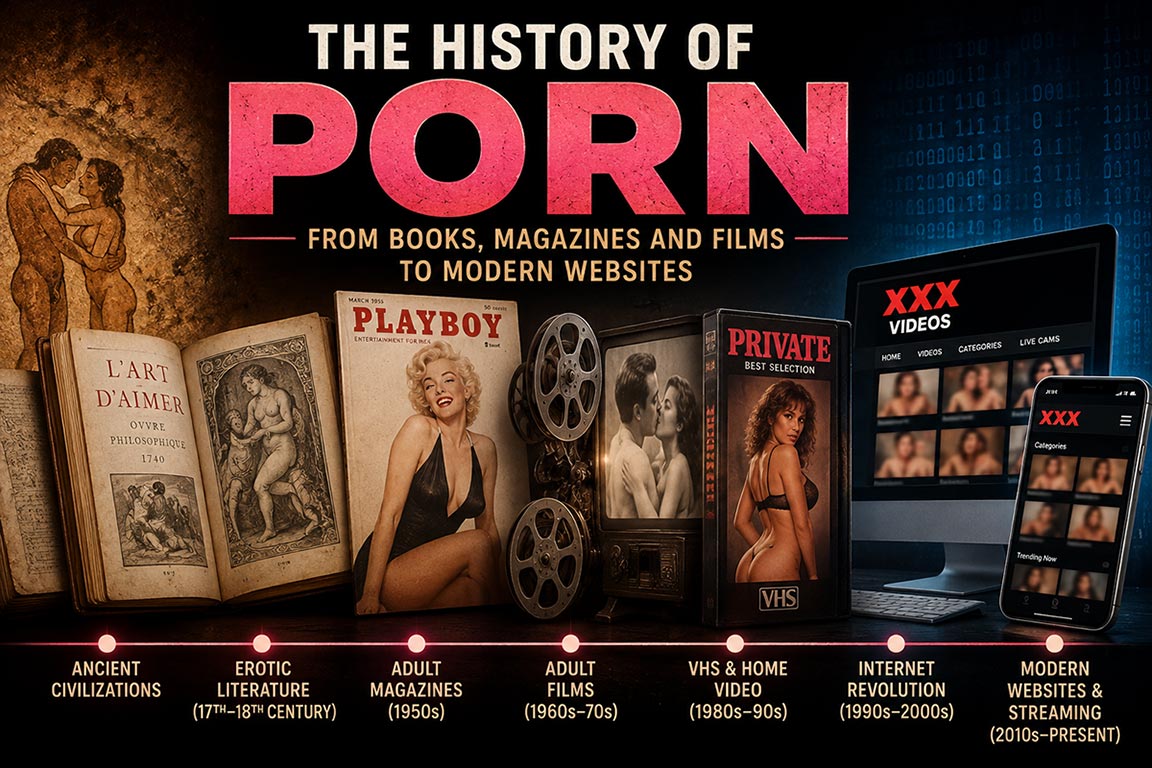
The History of Pornography
Pornography has a much longer history than the internet, magazines, or even modern printing. Throughout human history, societies have produced art, literature, sculptures, illustrations, photographs, and films depicting sexuality. What has changed dramatically over time is not simply the existence of erotic material, but the technology used to create it, distribute it, and consume it.
From ancient manuscripts to today’s enormous online adult industry, the history of pornography is closely connected to the history of communication itself.
Ancient Origins: Sexuality in Art and Literature
Some of the earliest known civilizations left behind artistic representations of sexuality.
Ancient Mesopotamian, Egyptian, Greek, Roman, Indian, and Asian cultures all produced works containing erotic themes. These could take the form of sculptures, pottery, paintings, poetry, religious art, or literary works.
One famous example is the Kama Sutra, an ancient Indian Sanskrit text traditionally attributed to Vātsyāyana. Although it is often regarded today primarily as a sexual manual, the work is much broader, addressing relationships, courtship, marriage, social life, and pleasure.
Ancient Greek and Roman art also frequently incorporated nudity and sexuality. Erotic scenes appeared on pottery, frescoes, mosaics, and other objects. The discovery of erotic material at sites such as Pompeii and Herculaneum demonstrates that sexual imagery was not exclusively produced for private consumption.
However, applying the modern word “pornography” to all of these ancient works can be misleading. Different cultures had very different attitudes toward nudity, sexuality, religion, and artistic expression.
The Printing Revolution
The history of modern pornography changed dramatically after the invention of the printing press in Europe during the 15th century.
Printing made it possible to reproduce texts and illustrations on a much larger scale. Books that previously required laborious hand copying could now be produced in substantial quantities.
Erotic and sexually themed literature eventually became part of this new publishing culture.
During the Renaissance and subsequent centuries, European writers and publishers produced works containing erotic stories, poems, illustrations, and satire. Some publications were openly controversial and circulated privately or clandestinely.
The expansion of literacy also created a larger potential audience. For the first time, sexual literature could increasingly become a commercial product rather than something restricted to wealthy individuals or specialized artistic circles.
The Rise of Erotic Literature
By the 18th and 19th centuries, erotic literature had developed into an established, although frequently underground, publishing category.
Books and pamphlets containing sexual material circulated throughout Europe and North America. Some were published anonymously or under pseudonyms because producing or distributing such material could lead to legal or social consequences.
The 19th century also saw the emergence of an important new technology: photography.
Photography would completely transform the adult entertainment industry.
Photography Changes Everything
The invention and spread of photography during the 19th century made it possible to reproduce realistic images of people rather than relying exclusively on drawings and paintings.
Erotic photographs began circulating privately and commercially. Early photographic studios sometimes produced images intended for artistic or personal purposes, while other photographs were created specifically for an adult audience.
Photography also introduced a new problem for governments and societies: images could now be reproduced much more easily than before.
As printing technologies improved, photographs could increasingly appear in books, postcards, catalogs, and other publications.
The combination of photography and mass printing laid the foundation for the modern adult magazine industry.
The Golden Age of Adult Magazines
During the 20th century, magazines became one of the most recognizable forms of adult entertainment.
Publishers developed magazines specifically aimed at adult audiences, combining photography, interviews, articles, fiction, humor, and lifestyle content.
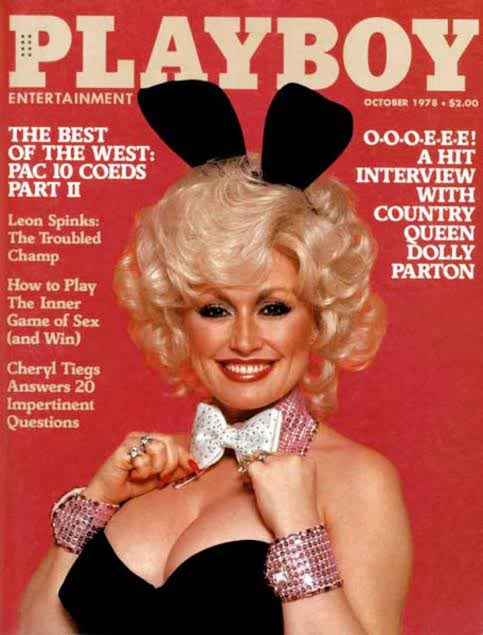
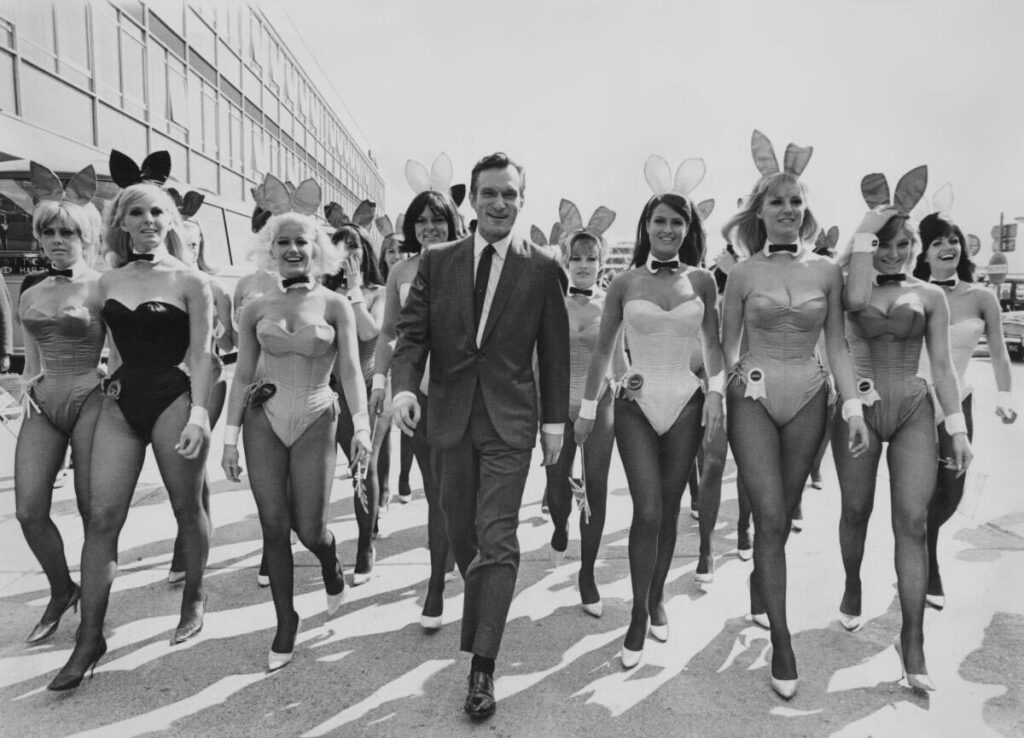
One of the most famous examples was Playboy, founded by Hugh Hefner in 1953. Playboy became a major cultural phenomenon and helped change mainstream attitudes toward sexuality, particularly in the United States.
Other publications followed, creating an enormous international magazine market.
The rise of magazines also demonstrated an important pattern that would repeat throughout the history of pornography: new technology did not necessarily replace older forms immediately. Instead, different formats often existed alongside one another for decades.
Cinema and the Birth of Adult Film
Motion pictures introduced another major technological shift.
Erotic films existed almost from the early days of cinema, although they were generally produced and distributed outside mainstream theatrical systems. As film technology improved, adult filmmaking became increasingly sophisticated.
During the 1960s and 1970s, social attitudes toward sexuality changed significantly in parts of Europe and North America. This contributed to the emergence of what became known as the “Golden Age of Porn.”
Feature-length adult films received greater attention, and some productions were shown in specialized theaters.
The industry also began developing recognizable performers, directors, studios, and distribution networks.
VHS and the Home Video Revolution
Perhaps the biggest transformation before the internet came with home video.
During the late 1970s and especially the 1980s, VHS technology allowed people to watch movies at home rather than visiting a theater.
The adult industry quickly adopted home video because it offered enormous advantages. Consumers could purchase or rent material and watch it privately.
This changed the economics of adult entertainment.
Instead of relying primarily on theaters and magazines, companies could produce videotapes and distribute them through specialized retailers and rental stores.
The adult industry became one of the major early adopters of consumer video technology.
The Internet Changes Everything
The arrival of the World Wide Web in the 1990s created another revolutionary change.
Early adult websites were relatively simple. Many consisted primarily of photographs, galleries, text, and eventually downloadable video.
Dial-up connections limited video quality and made large files inconvenient, but the basic model was already emerging: adult content could be accessed from a computer without purchasing a physical product.
As broadband internet became widespread during the 2000s, online video became dramatically easier to consume.
Websites could host enormous libraries of photographs and videos, allowing users to search and browse content almost instantly.
The physical adult media industry began losing much of its traditional distribution power.
Magazines declined. Video stores disappeared. Physical media became less important.
The internet had effectively transformed adult entertainment from a product that consumers purchased into a service they could access continuously.
The Rise of Tube Sites
During the mid-to-late 2000s, so-called “tube” websites became enormously influential.
Their basic concept was similar to mainstream video-sharing platforms: users could browse large collections of video, search by category, and watch content immediately.
This created a major change in consumer behavior.
Instead of purchasing an individual magazine or DVD, visitors could access huge libraries of material through a single website.
Advertising became an important source of revenue, while traffic and search-engine visibility became central to the business model.
The adult industry increasingly adopted technologies such as streaming video, recommendation systems, user accounts, ratings, comments, and personalized content.
Smartphones and the Always-Connected Era
The smartphone revolution accelerated these changes.
Once high-speed mobile internet and large-screen smartphones became widespread, adult websites were no longer primarily desktop destinations.
Users could access websites from virtually anywhere.
Responsive web design, mobile video streaming, faster cellular networks, and apps transformed the experience once again.
At the same time, social media changed how performers and creators could communicate directly with audiences.
The Creator Economy
One of the most significant developments of the 2010s and 2020s was the growth of direct-to-fan platforms.
Instead of working exclusively with traditional studios, performers could build their own audiences and monetize their content directly.
Subscription platforms, fan communities, livestreaming, social media, and independent websites created new business models.
This represented another major shift in the history of adult entertainment.
The industry had moved from:
books → photographs → magazines → cinema → VHS → websites → streaming → direct-to-fan platforms.
The creator increasingly became both the performer and the publisher.
What Comes Next?
The history of pornography is ultimately a history of technology, culture, economics, and changing social attitudes.
Every major communication revolution has created a new way to produce and distribute adult material. The printing press expanded the reach of erotic literature. Photography introduced realistic images. Cinema introduced moving pictures. VHS brought adult entertainment into homes. The internet made enormous libraries available instantly. Smartphones made them permanently accessible.
Today, artificial intelligence, virtual reality, interactive media, livestreaming, and increasingly sophisticated personalization technologies are creating yet another phase.
Whatever the future brings, one pattern seems certain: adult entertainment will continue to evolve alongside the technologies people use to communicate and consume media.
From ancient sculptures and manuscripts to smartphones and global streaming platforms, the history of pornography is ultimately part of a much larger story — the history of how humans create, reproduce, distribute, and consume images and ideas.