How Technology Is Changing the Way We Experience Sexuality
The adult film industry has always been closely connected to technological change. From printed magazines to VHS tapes, DVDs, streaming websites and subscription platforms, every major technological revolution has changed not only how adult entertainment is distributed, but also how people discover, consume and think about sexuality.
Today, that transformation is accelerating.
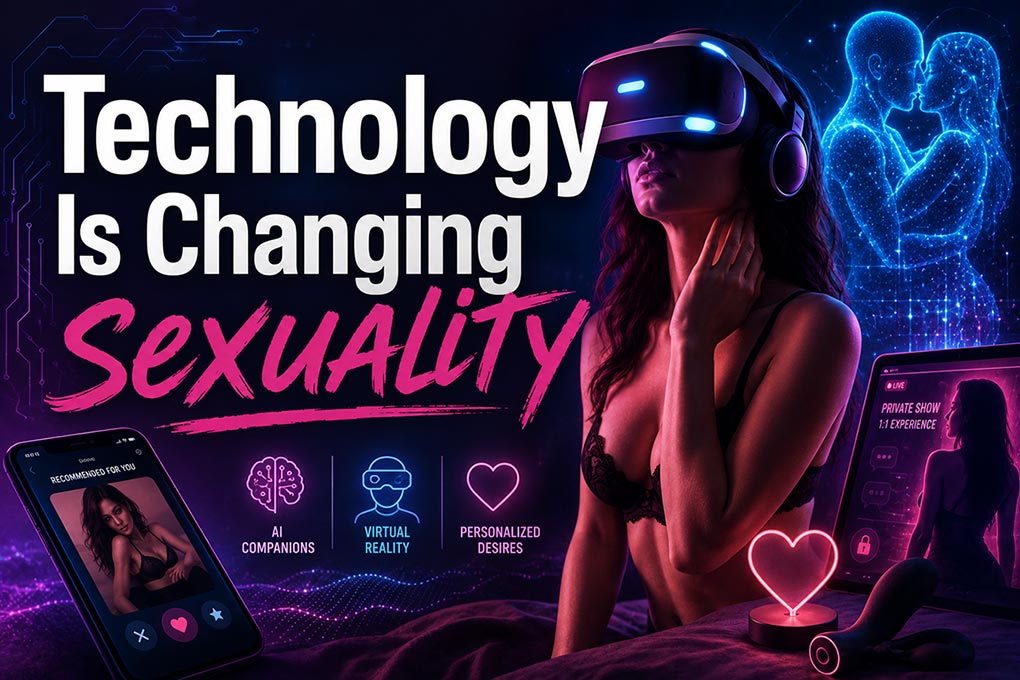
Artificial intelligence, virtual reality, personalized recommendation systems, immersive devices, creator platforms and increasingly sophisticated digital identities are creating an adult entertainment ecosystem that looks very different from the one that existed only a decade ago.
The interesting question is no longer simply what adult entertainment will look like in the future. The bigger question is how technology might change the relationship between humans, sexuality and entertainment itself.
From Movies to Personal Experiences
Traditional adult films were essentially a broadcasting model.
A studio produced a movie, distributed it through a physical or digital channel, and thousands or millions of people watched essentially the same content.
The Internet changed this model dramatically.
Modern platforms allow users to search for extremely specific interests, follow individual creators, interact with performers and choose exactly what they want to consume. Instead of a limited catalog controlled by studios, users can navigate enormous libraries of content almost instantly.
This represents a fundamental shift from mass entertainment to personalized entertainment.
Recommendation algorithms accelerate that change. Just as Netflix, YouTube and Spotify learn what their users enjoy, adult platforms can analyze viewing behavior and suggest increasingly personalized content.
The result is an experience in which two users can visit the same website and encounter completely different versions of it.
In the future, this personalization could become even more sophisticated.
Artificial Intelligence and the Personalization of Desire
Artificial intelligence is likely to become one of the most influential technologies in the adult entertainment business.
AI can already generate images, video, voices and conversational characters. As these technologies become more realistic, the distinction between human-created and synthetic entertainment will become increasingly difficult to recognize.
One possible future is the rise of AI-generated virtual performers.
Instead of following a real person, a user could interact with a completely fictional digital character whose appearance, personality and behavior are generated dynamically.
The character could remember previous conversations, adapt its personality to the user and respond in real time.
That would transform adult entertainment from something people watch into something they interact with.
However, this development also creates enormous ethical challenges.
Consent becomes particularly complicated when technology can create realistic representations of real people without their permission. The problem of non-consensual synthetic imagery, often referred to as deepfakes, is already a major concern.
As generative AI becomes more powerful, laws and platforms will have to determine where legitimate fictional content ends and digital exploitation begins.
Virtual Reality and the End of the Screen
Virtual reality could represent another major turning point.
Traditional adult entertainment is fundamentally two-dimensional. Even when the production quality is extremely high, the viewer remains outside the scene.
Virtual reality attempts to eliminate that distance.
Instead of watching a scene on a screen, users can experience an immersive environment in which they appear to occupy a particular location. Advances in cameras, spatial audio, haptic devices and real-time rendering could make these experiences increasingly convincing.
The important change is psychological.
Watching something and feeling present somewhere are not necessarily the same experience.
If virtual environments become sufficiently realistic, adult entertainment could increasingly resemble interactive gaming rather than traditional cinema.
Users may not simply select a video. They may select an environment, character, scenario or narrative and participate in an experience that changes according to their decisions.
This could eventually create an entirely new category of entertainment somewhere between cinema, gaming and social interaction.
The Rise of the Virtual Companion
Another potentially important development is the combination of AI and conversational interfaces.
People already use chatbots for companionship, entertainment and emotional interaction. As conversational AI becomes more sophisticated, virtual companions could become increasingly personalized.
A virtual character could theoretically have a recognizable personality, remember conversations, develop preferences and communicate through text, voice, video or virtual reality.
For the adult industry, this creates a completely different business model.
Instead of paying for access to a library of videos, users could pay for an ongoing relationship with a digital character.
The economic model could therefore move from content consumption to subscription-based companionship.
This raises an uncomfortable but fascinating question: if an artificial character can convincingly simulate affection, attraction and intimacy, does the experience still qualify as entertainment, or does it become something psychologically different?
Creator Platforms Have Already Changed the Industry
The future isn’t entirely about futuristic technology. One of the biggest transformations has already happened.
Subscription-based creator platforms have changed the relationship between performers and audiences.
The traditional adult-film model involved studios, producers, distributors and retailers. Digital platforms can dramatically reduce the number of intermediaries.
A creator can build an audience directly, communicate with fans, sell subscriptions and produce content independently.
This is part of a much larger transformation occurring throughout the entertainment industry.
Musicians, journalists, video creators and filmmakers are all increasingly able to monetize audiences directly. Adult creators were among the earliest groups to demonstrate how powerful this model could become.
The next stage may combine creator platforms with AI tools that help performers produce, edit, translate, market and distribute content more efficiently.
AI could even allow creators to offer personalized digital experiences without requiring them to personally participate in every interaction.
That could dramatically increase the economic value of an individual creator’s brand.
Algorithms May Influence Sexual Culture
One of the less obvious consequences of technology is the power of recommendation systems.
Algorithms do not simply show people what already exists. They can influence what people discover and, eventually, what becomes popular.
If a platform repeatedly recommends a particular type of content, users may become more familiar with it. Popular categories can become even more popular because algorithms continue promoting them.
This creates a feedback loop.
In the future, the algorithms controlling adult entertainment could therefore play a role in shaping sexual culture itself.
The issue isn’t necessarily that algorithms are “creating” people’s preferences. Human sexuality is far too complex for such a simple explanation.
But technology can influence which preferences are visible, which creators become successful and which forms of entertainment receive attention.
That makes platform design an increasingly important part of the adult entertainment ecosystem.
Privacy Could Become the Biggest Challenge
The more personalized adult entertainment becomes, the more data companies potentially have access to.
Search history, viewing behavior, subscriptions, interactions and preferences can reveal extremely intimate information about an individual.
This makes privacy particularly important.
A conventional entertainment preference might reveal someone’s taste in movies or music. Sexual preferences can be much more sensitive.
Companies operating in this sector therefore face a difficult balance between personalization and privacy.
The future may require stronger encryption, better anonymity systems, clearer data policies and greater control for users over what information is collected.
A person should be able to explore their sexuality without worrying that their private interests will later become a source of embarrassment, discrimination or exploitation.
Age Verification Will Become More Sophisticated
Technology will also influence how platforms deal with age restrictions.
Governments around the world are increasingly examining ways to prevent minors from accessing adult content.
The traditional approach—simply asking a visitor to confirm that they are over 18—is obviously limited.
Future systems may rely on more sophisticated forms of age verification, potentially involving digital identity systems, third-party verification or privacy-preserving technologies.
The challenge will be finding a system that protects minors without forcing adults to surrender excessive amounts of personal information.
This is likely to become one of the biggest technical and political debates surrounding the industry.
What Happens to Human Performers?
Perhaps the most important question concerns the people who actually work in the industry.
If AI-generated performers become increasingly convincing, some forms of entertainment could become partially automated.
Studios may be able to create virtual actors without hiring human performers for every production.
At the same time, technological change could increase the value of authenticity.
When synthetic content becomes abundant, real human connection may become more valuable rather than less.
People may increasingly seek performers they genuinely identify with, follow and trust precisely because they are real.
In that sense, AI could simultaneously compete with human performers and make authentic human creators more valuable.
The Future May Be Less About Pornography and More About Experiences
The adult entertainment industry has historically been defined by the idea of watching sexual content.
That definition may eventually become outdated.
The future could involve interactive virtual worlds, AI companions, personalized narratives, immersive environments, digital creators and experiences that respond dynamically to individual users.
The central product may no longer be a movie.
It may be an experience.
And that could fundamentally change the economics of the industry.
Instead of selling the same piece of content to millions of people, companies and creators could sell millions of highly personalized experiences to individual users.
Technology therefore has the potential to transform adult entertainment in much the same way that streaming transformed television and smartphones transformed communication.
A New Era of Sexual Entertainment
The history of adult entertainment has always been a history of technology.
The camera made sexual photography scalable. Film created the adult movie. VHS brought it into the home. The Internet made it instantly accessible. Smartphones made it portable. Subscription platforms made it personalized.
The next chapter could be defined by artificial intelligence, immersive reality and interactive digital experiences.
But technology alone will not determine what happens next.
Questions about privacy, consent, authenticity, regulation, age verification and human relationships will be just as important as technological innovation.
The ultimate transformation may therefore be bigger than the adult film industry itself.
As entertainment becomes increasingly personalized and immersive, society will have to reconsider what it means to watch, interact, fantasize and form connections through technology.
The future of adult entertainment may not simply be about producing better images or more realistic videos.
It may be about creating experiences that increasingly blur the boundaries between watching, interacting, imagining and experiencing.
And that could make the next decade one of the most transformative periods in the history of sexuality and entertainment.